Skip to content
Sydney, NSW, AustraliaUpdated · June 2026

Current · Completing MIT (AI) at Macquarie University

Applied AI Researcher and AI Systems Engineer

Shaurav Khadka

Systems lens

I build and evaluate dependable AI systems—tracing failure modes, testing assumptions, and turning findings into workflows that can be inspected and improved.

My applied portfolio spans document intelligence, semantic retrieval, temporal learning, computer vision, and deployment adaptation. I am also building the foundations for interdisciplinary research in scientific machine learning and AI-assisted quantum-device characterisation.

Measured Highlights

Start with what changed.

Three benchmarks across deployment adaptation, reinforcement learning, and retrieval.

Deployment-specific Sim2Real adaptation

2.38% 95.24%

Baseline2.38%
Adapted95.24%

Robot-image accuracy after deployment-specific Sim2Real adaptation

The model looked strong on curated data and degraded sharply on robot-camera images. The recovery came from treating domain shift as a deployment problem, not a footnote.

Why it matters: the adaptation restored useful robot-camera performance under changed lighting, viewpoint, scale, and background conditions.
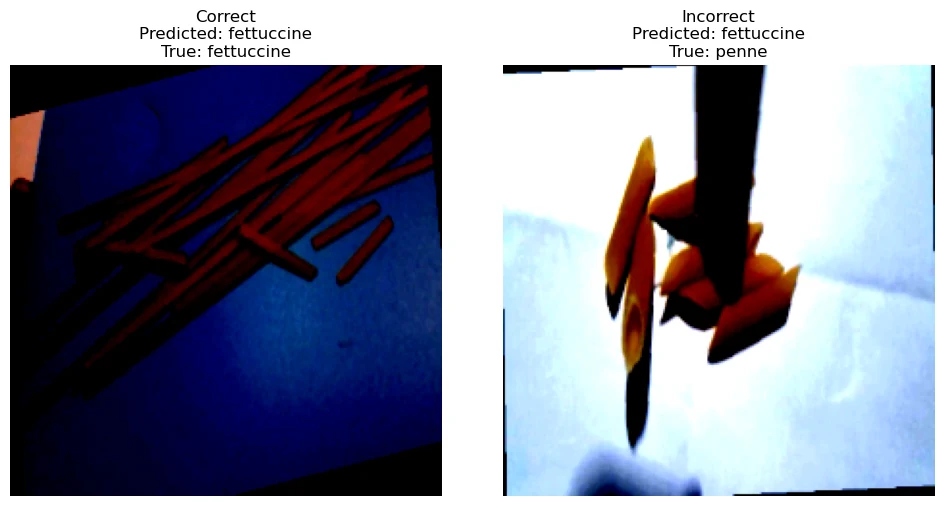
Robot-camera deployment prediction comparison after Sim2Real adaptation

Robot-camera predictions · published team-level result

Evaluation context
Baseline
2.38% before deployment-specific adaptation.
Measured
95.24% robot-image accuracy after targeted collection, augmentation, and fine-tuning.
Conditions
Robot-camera inputs with lighting, viewpoint, scale, and background differences.
Attribution
Collaborative team-level result with exported notebook figures.

Supporting benchmark 02

300 → 1,925

AirRaid PPO mean reward after temporal observation changes

Observation design materially changed what the policy could learn. Frame skipping and frame stacking improved the benchmark result without pretending algorithm choice was the only lever.

Why it matters: the result shows that observation design can materially change what a policy learns before the algorithm itself is replaced.

Supporting benchmark 03

P@5 = 0.68 · R@5 = 0.68

RedditPulse semantic retrieval quality

The retrieval layer was measured before generation was treated as useful. That matters because grounded insight quality depends on which sources the system surfaces first.

Why it matters: downstream summaries are only as useful as the source material retrieved before generation begins.

Working Method

From raw inputs to dependable deployment.

A practical evaluation loop grounded in the way I build and inspect applied AI systems.

  1. 01

    Ingest

    Map inputs, schemas, edge cases, constraints, and the operational path around the model.

  2. 02

    Benchmark

    Establish reproducible baselines and measurable success conditions before tuning the system.

  3. 03

    Error-analyse

    Trace failures across data, model, transformation, validation, and review boundaries.

  4. 04

    Adapt

    Change the representation, workflow, threshold, or model only where the findings justify it.

  5. 05

    Deploy

    Document limitations, preserve traceability, and translate results into a workflow people can inspect.

Applied Systems

Selected applied systems.

Production reliability, temporal learning, retrieval, evaluation, and responsible-AI work.

Prior industry workflowTRUUTH · Former AI/ML R&D Internship

Production AI Reliability and Document Intelligence

Problem: Document intelligence can fail long before or after OCR. Real reliability depends on the complete path from ingestion to extraction, transformation, validation, and review.

Contribution: Built repeatable evaluation workflows across OCR configurations, mappings, confidence scores, error codes, and reruns while preserving traceability and review boundaries.

PythonpandasAWS S3boto3Azure Document IntelligenceJSON
Inspect case study

01

OCR

02

Map

03

Validate

04

Trace

Shared here: sanitised workflow record. Confidential operational data and internal metrics are excluded.

Academic and industry referees are available on request for selected roles and research collaborations.

Supporting builds

Five supporting systems across research, prototypes, and evaluation.

Each card states the system, category, and route for deeper inspection.

Temporal Graph Learning

Temporal graph-learning research build

02

Temporal GNN for Blockchain Fraud Detection

Fraud is relational and time-dependent. Static tabular features can miss how transactions evolve across a network.

t0 → t1 → t2

Inspect case study

Generative AI · Conversational Systems

Scoped conversational-AI prototype

03

LLM-Based Financial Assistant Prototype

Conversational assistants can produce fluent but poorly scoped responses. This prototype explores structured prompting, model comparison, synthetic profiles, and explicit safety boundaries.

profile → prompt → compare → respond

Inspect case study

NLP · Information Retrieval

Modular retrieval research toolkit

04
R01
R02
R03

Semantic Search and Information Retrieval Engine

Keyword matching is transparent but limited when meaning varies across phrasing. The system needed a modular comparison path from classical retrieval to dense semantic search.

clean → encode → rank → evaluate

Inspect case study

Machine Learning · Data Science

Reusable experimental evaluation pipeline

05
Benchmark 1
Benchmark 2
Benchmark 3
Benchmark 4
Benchmark 5

Machine-Learning Evaluation and Data-Science Pipeline

A model result is only useful when the path from raw data to evaluation is reproducible, comparable, and explicit about failure cases.

data → features → compare → inspect

Inspect case study

Responsible AI · Governance

Responsible-AI research and analysis portfolio

06
Risk
Signals
Oversight
Improve

Responsible AI, Governance and Human-Centred Analysis

AI systems can be technically capable and still fail users, organisations, or communities when accountability, transparency, risk, and human oversight are treated as afterthoughts.

risk → explain → govern → improve

Inspect case study

Project index

Browse all project routes.

A compact index of results, methods, and prototypes.

09 routes

Research Profile

Research Directions

My research builds from inspectable applied-AI systems toward deeper interdisciplinary work in reliable learning, temporal reasoning, and scientific machine learning.

The longer-term direction that most motivates me is AI-assisted quantum-device characterisation. I am building the mathematical and physical foundations carefully: study the theory, reproduce small experiments, test implementations, and make stronger claims only when the work earns them.

Discuss a research collaboration
Emerging research trajectory

AI-Assisted Quantum Device Characterisation

A longer-term interdisciplinary direction: whether physically informed computational methods can support the characterisation of noisy quantum devices. My interest is in the bridge between open quantum systems, temporal reasoning, scientific machine learning, and careful experimental validation.

Interdisciplinary direction

Questions I am building toward

  • Where can temporal AI methods assist characterisation without obscuring the underlying physics?
  • Which mathematical, simulation, and experimental foundations must be reproduced before stronger claims are justified?

Current research priority

Trustworthy AI Systems and Production Reliability

Evaluation methods for AI pipelines where traceability, robustness, auditability, confidence handling, latency, and cost matter alongside model accuracy. My prior document-intelligence internship work treated the full decision pipeline—not an isolated model—as the unit of analysis.

Questions I want to pursue

  • How should reliability be measured across the full decision pipeline?
  • How can failure analysis distinguish model, data, and system faults?
  • How should confidence, review boundaries, and operational constraints shape deployment decisions?

Active research area

Temporal Learning for Dynamic and Relational Data

Learning systems for data that evolves over time: temporal graphs, sequential signals, changing relationships, and non-static risk patterns.

Questions I want to pursue

  • When does temporal modelling materially outperform static baselines?
  • How should time-dependent behaviour be evaluated and explained?

Active research area

Sim2Real Perception and Autonomous Systems

Robust perception under deployment shift, confidence-aware decisions, and vision-to-action systems that must behave safely outside curated datasets.

Questions I want to pursue

  • How can deployment adaptation be designed in from the beginning?
  • How should confidence thresholds shape downstream actions?
Research mapApplied foundations and next stepsThree foundation groupsOpen map

The bridge is concrete: systems work in reliability, temporal modelling, retrieval, deployment adaptation, and focused scientific-ML preparation.

Reliability and evaluation

Applied methods supported by inspectable systems work and explicit benchmark results.

  • Traceability
  • Confidence analysis
  • Error analysis
  • Benchmark design
  • Operational constraints
  • Auditability

Learning under change

Built foundations for dynamic data, deployment shift, and reproducible experimentation.

  • Semantic retrieval
  • Temporal modelling
  • Graph learning
  • Sim2Real adaptation
  • Uncertainty analysis
  • Reproducible evaluation

Scientific-ML preparation

Foundational preparation for physically informed AI research through reproducible study and small implementations.

  • Scientific machine learning
  • Dynamic systems
  • Computational modelling
  • Hybrid-QML exploration
  • Quantum-device characterisation · emerging

Experience

Research and Technical Experience

Applied research, production-oriented AI R&D, technical leadership, and software engineering.

  1. TRUUTH

    AI/ML Research and Development Intern

    Feb 2026 — Jun 2026

    Sydney, NSW, Australia · Hybrid

    Production-oriented document intelligence, fraud-detection evaluation, and AI reliability analysis. Built repeatable OCR-evaluation workflows across layouts, configuration choices, confidence scores, field mappings, and error codes while documenting traceability, reproducibility, validation dependencies, latency, and cost considerations.

    • Document Intelligence
    • OCR Evaluation
    • AWS S3
    • Azure Document Intelligence
    • Reliability
  2. Picpoint Nepal Pvt. Ltd.

    Chief Technology Officer

    Jun 2021 — Jun 2024

    Kathmandu, Nepal · Hybrid

    Technical leadership across operational systems, digital workflows, and data-informed decision support. Led the technical roadmap and maintained systems supporting remote workflows, business coordination, web operations, and market-intelligence tooling.

    • Technical Leadership
    • Operations Systems
    • Data Workflows
    • Web Systems
  3. Thakur International

    Jr. Full Stack Developer

    Jun 2019 — May 2020

    Kathmandu, Nepal · On-site

    Application development, API integration, debugging, and backend-data quality within an agile engineering team. Implemented and maintained web and mobile components while improving maintainability through structured debugging, refactoring, and performance tuning.

    • PHP
    • Python
    • JavaScript
    • REST APIs
    • Debugging
Additional experienceSupporting work completed while studying

Ingleburn Convenience Store

Operations and Digital Support Assistant · Part-time

Oct 2024 — Jun 2026

Supported transaction and inventory accuracy, POS troubleshooting, basic network and hardware issues, digital administration, and customer-facing operations while completing postgraduate study in Australia.

Community Impact

Community Technology and Leadership

Field technology support and selected leadership programs connected to sustainability, peer guidance, design thinking, and cross-cultural collaboration.

Field support

Solar and IT systems

Service continuity

2015 — Present

Leadership layer

4 selected programs

Long-term field technology

Technical Volunteer and Systems Support

Swogun Energy

Supported field deployment, testing, and troubleshooting of small-scale solar-power and IT systems in remote and off-grid settings in Nepal. Continues to provide occasional remote technical and digital support while based abroad.

  • Solar Systems
  • Field Support
  • IT Troubleshooting
  • Remote Communities

Supporting programs

Leadership, sustainability, peer support, and design thinking.

Selected record

United People Global

Certified UPG Sustainability Leader

Completed sustainability-leadership training focused on community-driven initiatives, positive citizen action, and the United Nations Sustainable Development Goals.

2024 — 2025Global online program

Aspire Institute

Aspire Leaders Program Alumnus and Peer Support Contributor

Completed leadership-development training and continues to support emerging participants through occasional peer guidance and resource sharing.

2023 — PresentGlobal online program

Macquarie University

MQ Incubator × KPMG Design Thinking

Applied human-centred problem solving, opportunity framing, and collaborative ideation within an innovation-focused program.

2026Sydney, NSW, Australia

Macquarie University

Postgraduate Global Leadership Program Graduate

Completed a university leadership-development program focused on reflective practice, cross-cultural collaboration, and professional growth.

2025Sydney, NSW, Australia

About

Applied AI Systems, Evaluated Honestly

I am an applied AI researcher and AI systems engineer focused on reliable, inspectable, deployment-aware systems.

My work spans document intelligence, semantic retrieval, temporal graph learning, computer vision, reinforcement learning, and production-oriented evaluation. I care about the full path around a model: inputs, representations, benchmark design, failure analysis, review boundaries, and the workflow that eventually reaches users.

Longer-term interests include scientific machine learning and quantum-device characterisation. I approach them through careful study and small reproducible experiments.

Research stance

I do not trust a result I cannot inspect.

I do not treat a benchmark as evidence until it survives failure cases.

I do not publish a claim I cannot reproduce.

The rest is disciplined research.

Macquarie University

Master of Information Technology · Artificial Intelligence

2024 — 2026

London Metropolitan University · Islington College

BSc Computer Science · First Class Honours

2017 — 2021

Research Writing

Research Notes and Engineering Decisions

Four on-site notes on research questions, evaluation choices, and engineering decisions, with four DOI-linked technical outputs below.

04 notesORCID iD ↗
Research output trailPreprints, reports, and DOI-linked outputs are maintained on the ORCID record and linked directly below.0009-0009-9874-8239
DOI-Linked Technical OutputsEarly research outputs deposited with persistent DOI identifiers. These are non-peer-reviewed technical preprints and reports.04 outputs

Independent Publishing

Books & Independent Publishing

Independent authorship, illustration, and editorial credits presented as a compact publishing record.

Featured authored publication

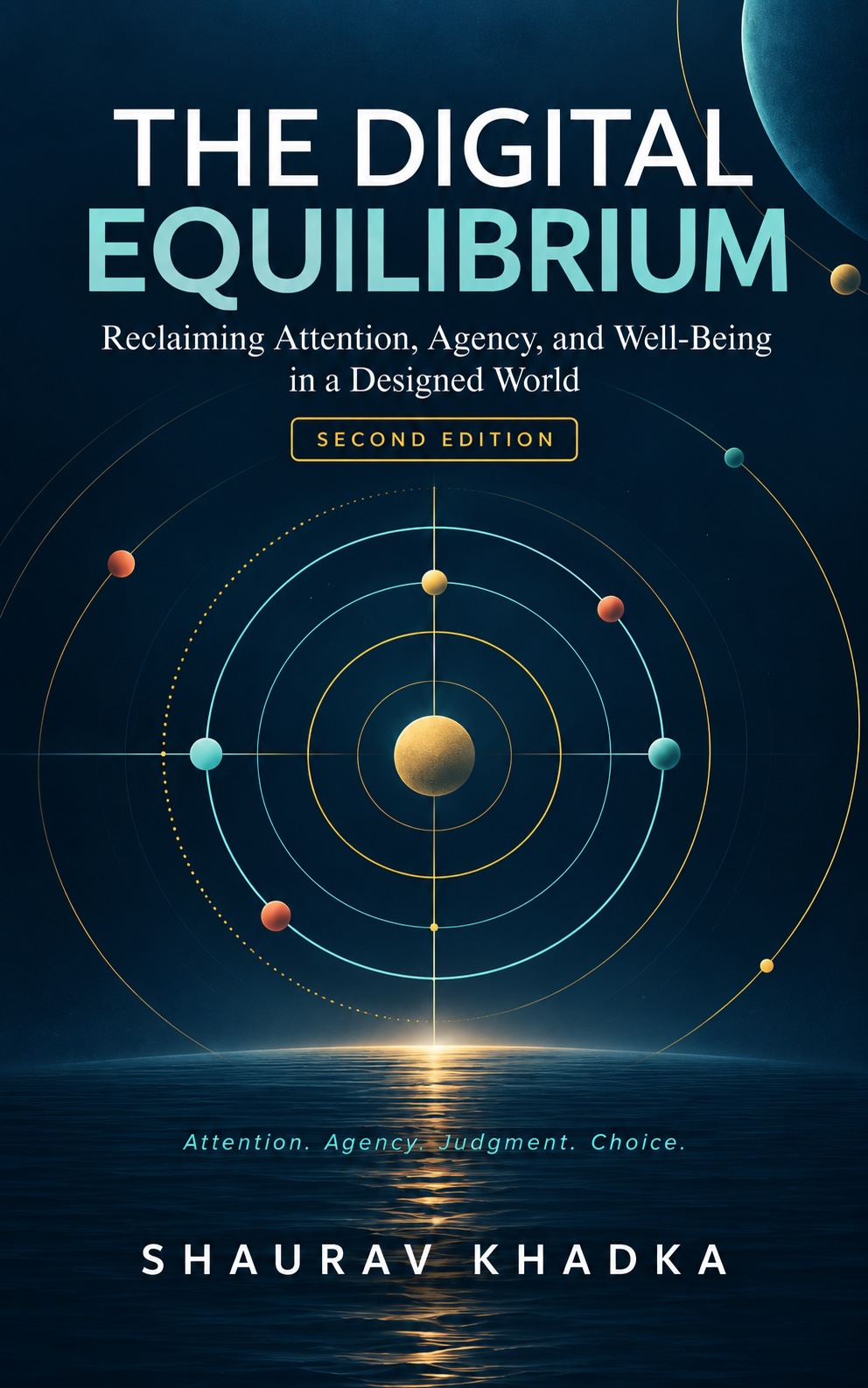
The Digital Equilibrium

Navigating Technological Advancement for Optimal Well-Being

An independent authored work exploring how technological progress can be balanced with human well-being and intentional living.

A small publishing trail spanning technology, well-being, and selected creative collaboration.

Collaborative editions6 selected creative credits

Illustrated and editorial work

Selected illustration and editorial credits across children’s stories and reflective writing.

Browse author page
Browse titles

Illustrator · Creative contributor

Joyful Stories

Joyful Stories

Illustrator · Creative contributor

Joyful Stories

Mazzako Katha · Alternate edition

Illustrator · Creative contributor

2 in 1 Joyful, Children Stories

Combined children’s-story edition

Contact

Choose the conversation worth continuing.

Choose a research or role-focused conversation, or continue exploring the portfolio.

Research

Research collaboration

Exploring dependable AI systems, deployment-aware evaluation, or scientific-ML directions? Start with the notes or open a research conversation.

Roles

Applied AI research and engineering roles

Hiring for applied AI research, ML systems, or reliability-focused engineering? Review the résumé, inspect the systems portfolio, and start a focused conversation.

Continue exploring

Explore more of the portfolio before reaching out.

Current status

Completing Master of Information Technology (Artificial Intelligence) at Macquarie University · Sydney-based · open to selected roles and research collaborations.

Response target

I aim to reply within 1–2 business days.

Referees available

Academic and industry referees are available on request for selected roles and research collaborations.

Sydney-based · open to selected conversationsGitHub ↗LinkedIn ↗ORCID iD ↗